
Trailer Ball Installation Guide for Trucks and SUVs
If you properly install a hitch ball mount on your truck or SUV, you can safely and reliably tow for business fleets, moving building equipment, and farming. There is a trailer ball that connects the receiver hitch on your car to the trailer coupler and holds the tongue's weight while it's moving. To install something correctly, you need to choose the right ball width (usually 2 inches or 2-5/16 inches), make sure the load ratings match the gross trailer weight, tighten the shank to the right torque specs, and do regular maintenance checks. Whether you're a fleet manager, a buying worker, or an installation technician, knowing these basics will keep your equipment from breaking down, lower your risk of liability, and make parts last longer in a wide range of towing situations.
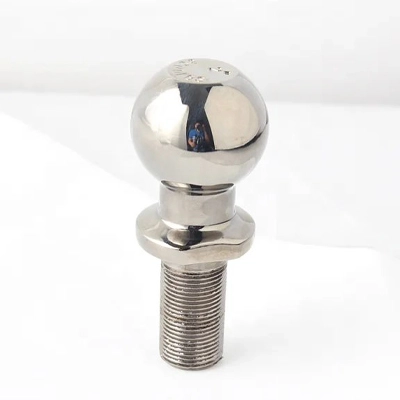
Understanding Trailer Balls: Types, Sizes, and Materials
The terms used for pulling parts can be hard for even experienced procurement managers to understand. People often use the terms "trailer ball" and "hitch ball" to refer to the same thing: the sphere coupling device that locks into the trailer's coupler system. Knowing the differences between the different types of balls helps make sure that product standards match up with working needs.
Standard vs. Heavy-Duty Ball Configurations
Standard tow balls are good for light-duty uses like utility trailers and small equipment hauliers. They can handle trailer weights of up to 6,000 pounds. These units are made of carbon steel that has been chrome-plated and have simple base shapes. Heavy-duty models made from drop-forged, heat-treated steel (AISI 1045 or 4140 metal) can pull up to 30,000 pounds in Class IV and Class V tow standards. The forging process makes the chemical structure thicker, which greatly improves the shear resistance when dynamic loads are applied.
Customisable hitch balls that come in multiple sizes solve the problem that fleet workers have when they have to keep track of a variety of trailers. A tri-ball mount lets you quickly switch between sizes of 1-7/8 inches, 2 inches, and 2-5/16 inches without taking the whole unit off the receiver. This flexible design cuts down on downtime when equipment needs to be changed and on the number of ball mounts you need to keep on hand.
Measuring Specifications for Compatibility
Mismatches between your hitch receiver and trailer coupler can be very expensive, so make sure you measure correctly. When you use callipers to make sure you're accurate to within 1/32 inch, the trailer ball diameter shows how wide the sphere is at its biggest point. 1-7/8-inch is common for light trailers, 2-inch is common for medium-weight uses, and 2-5/16-inch is common for big tools and boat trailers. Depending on the load, the shank width (the round part that goes through the hitch plate) can be anywhere from 3/4 inch to 1-1/4 inch. The length of your shank must match the width of your hitch receiver, which is usually between 2 and 3.5 inches..
There are different kinds of thread designs, from thick to fine. Coarse threads, like 1-inch x 8 TPI, make installation easy, but they can come away when the machine shakes. Fine threads, like 1-inch x 14 TPI, keep links tighter, which is especially useful off-road or in farming where the rough terrain makes the parts move all the time. Before buying mounting tools, you should always check that the thread pitch matches the specs.
Material Selection for Durability and Corrosion Resistance
The choice of material has a huge effect on service life, especially in tough settings. Chrome-plated carbon steel is still the standard in the industry because it protects against rust well enough for most uses and is priced competitively. The chrome finish makes the surface hard and smooth, which stops rust from forming and makes joining easier. Chrome coating, on the other hand, can chip or crack when hit, letting water get to the steel underneath.
304 or 316 type stainless steel balls are better at resisting corrosion in marine settings, along the coast, and when they are exposed to chemicals. Marine-grade 316 stainless steel has molybdenum in it, which makes it more resistant to chloride rust from saltwater spray. Stainless steel choices cost 40–60% more than chrome-plated options, but their longer life makes them worth the extra money for boats, transporting tools offshore, and any other use that will be in saltwater all the time.
Specialised finishes make materials work better. Zinc-nickel metal solutions do better than chrome in ASTM B117 salt spray tests that last longer than 500 hours. Black powder coating protects against rust and makes things less visible for practical or aesthetic reasons. Electrophoretic deposition (e-coat) evens out coverage across complicated shapes and seals up tiny surface flaws that let water in. When looking for large fleet purchases, the material specifications should match the harshness of your working surroundings and the frequency with which you plan to replace parts.
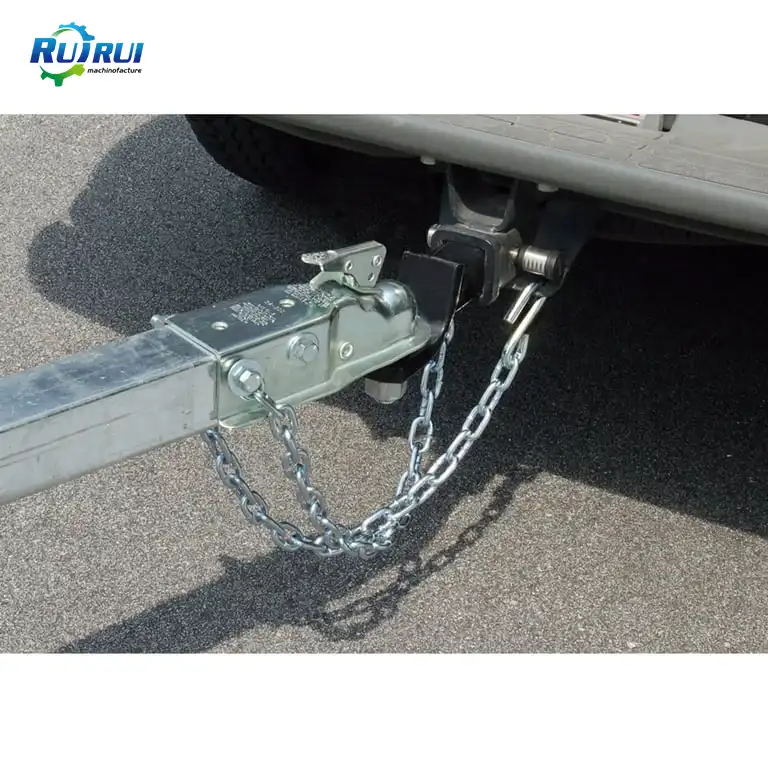
Step-by-Step Trailer Ball Installation Process for Trucks and SUVs
For professional repair, you need to be precise, use the right tools, and follow the manufacturer's force recommendations. Cutting corners during fitting weakens the structure and leaves you open to risk. We've led hundreds of installation projects for business fleets, and these processes are based on what we've seen work best in the field.
Required Tools and Safety Preparation
Gather the necessary tools before starting the process. You'll need safety glasses, a torque wrench that has been adjusted within the last year and is either a beam-type or a click-type rated for at least 250 ft-lbs, sockets that are the right size for the mounting nut on your trailer ball, and penetrating oil for receivers that are rusted. Anti-seize powder keeps stainless steel hardware from getting thread galling, and blue threadlocker keeps screws from coming loose from vibration.
Safety rules say that your car must have wheel chocks, the parking brake must be on, and the work area must be stable. Never work under a car that is only held by a jack. If there is rust or dirt on your hitch receiver, clean the hole with a wire brush and use rust converter before moving on. When there is contamination between the ball shank and receiver sleeve, stress builds up and fails faster because of wear.
Selecting Proper Size and Load Rating
Match the weight of your ball to the gross weight of your trailer + 20%. A ball that can hold at least 6,000 pounds is needed for a trailer that weighs 5,000 pounds. You should never go over the load values that are written on the top of the ball. The tongue weight, which is the force that the trailer puts on the ball, is usually between 10 and 15 percent of the gross trailer weight. Make sure that the tongue weight number of your ball can handle this load.
When pulling, the height of the ball affects how level the trailer is. When the trailer is level and loaded, measure from the ground to the middle of the coupler. Look at this number next to the distance from the ground to the centre of your receiver. You need a normal ball mount, a drop mount, or a rise mount based on the difference. Incorrect height leads to dangerous weight distribution, which makes the trailer shake and tyres wear out faster than they should.
Mounting and Fastening Procedures
Put the ball shank through the hole in your hitch ball mount, making sure that the flat parts on the shank line up with the flat walls of the mount. This alignment stops movement when the trailer ball is under load. Put the fixing nut on top of the shank threads, then the lock washer (if it came with it). First, tighten by hand to make sure the threads fit together easily and don't cross-thread.
The torque standard is very important and can't be changed. For most 1-inch shank balls, 100 to 125 ft-lbs are enough. For 1-1/4-inch shanks, 250 to 300 ft-lbs are enough. For specific numbers, look at the ball's documentation. Using a measured torque wrench, tighten the nut three times: first to 50% of the target torque, then to 75%, and finally to the final standard. This method makes sure that the threads are engaged evenly and that the end tightness is correct.
After reaching proper torque, mark the nut and shank with paint or a durable marker once you've reached the right force. This witness mark makes it easy to quickly check for tightening during pre-trip checks. Line up the pin holes on the ball mount piece and insert it into your receiver tube. Completely thread your hitch pin through, and then use a clip or lock to keep it in place. Good hitch pins are made of strengthened steel; stay away from cheap zinc-plated ones that break when they get stressed.
Maintenance and Inspection Protocols
Set up a first check 30 days after a new installation. Make sure the fixing nut's torque retention is good and that the receiver pin hasn't moved. After that, the car should be inspected every 5,000 miles or three months, whichever comes first. Check for cracks that go out from the ball's base, a lot of rust on the visible threads, and any deformations in the ball's surface. These signs mean that failure is about to happen and that the part needs to be replaced right away.
Lubrication keeps couplings in good shape and extends their life. Before each pulling practice, put a thin layer of marine-grade grease on the ball's surface. This keeps the ball and joint from rubbing against each other, which would cause heat to build up and speed up wear. Stay away from lubricants made from gasoline, which attract dirt and make grinding materials that are too rough. To keep the ball from flash rusting after pulling in the rain or over water, dry it completely and reapply protective grease within 24 hours.
Safety is directly linked to thread quality. If the fastening threads are damaged by stripping, rounding, or galling, you should take the part off right away. You should never use taps or dies to try to fix broken threads because the metal structure can't be fixed. When installing stainless steel parts, use anti-seize powder to keep the threads from joining together due to galvanic rust.
Key Considerations When Choosing the Best Trailer Ball for Your Truck or SUV
Buying choices about tow parts affect operating safety, the life of the equipment, and following the rules. When you know the basic differences between goods, you can find the best mix between price and performance.
Weight Ratings and Load Capacity Alignment
The gross trailer weight (GTW) and tail weight must meet the needs of your business. Class I hitches can hold up to 2,000 pounds gross vehicle weight and 200 pounds of tongue weight. They are only good for small utility trailers. Class II goes up to 3,500 pounds gross vehicle weight, which means it can hold gardening tools and small cargo trucks. Class III (up to 5,000 pounds gross vehicle weight) is for medium-sized boat trucks and goods hauliers. Class IV grades go up to 10,000 pounds, which means they can be used for business purposes like multi-axle equipment trailers.
Heavy industrial work, you need Class V parts that can hold up to 30,000 pounds or gooseneck designs that let you load things over the axle. For these uses, balls must be made from formed alloy steel that has been heated until it is RC 40–45 hard. Forging forms a molecular structure with grain flow patterns that stop cracks from spreading. This is different from casting balls, where random grain direction makes weak spots.
Tongue weight capacity is shown as a separate number because too much downward force fails in different ways than too much horizontal pulling force. A trailer ball could hold up to 10,000 pounds of gross weight, but only 1,000 pounds of tongue weight. When the tongue weight limit is exceeded, the ball shank bends, causing lasting deformation that concentrates stress. When you select bulk procurement, make sure that the parts you choose give you enough margins in both rates.
Compatibility with Hitch Types and Couplers
Receiver hitches all use the same tube sizes. Class I and II receivers are usually square and 1-1/4 inches in size, Class III and IV receivers are 2 inches in size, and Class V receivers have holes that are 2 1/2 inches or bigger. The shank on your ball base needs to be the same size as your receiver. There are adapter covers, but they add extra link points that weaken the system as a whole.
Coupler compatibility depends on matching the ball diameters perfectly, including the trailer ball. A 2-inch coupler needs a 2-inch ball. Using a smaller ball will cause the coupler to decouple, while a bigger ball won't seat properly. Locking couplers have devices inside that keep the coupler latch in place so it can't be released by accident. These need ball surfaces that are smooth and don't have any coating flaws that get in the way of the locking mechanism.
Instead of ball couplers, pintle ties, lunette rings, or fifth-wheel links are used in some specific situations. These options are often used in military, farming, and heavy building tools. Knowing the different connection needs of your fleet will keep you from getting parts that don't work together.
Comparing Size and Material Options
The 2-inch ball diameter is the most common size for general pulling. It works with most leisure trailers, utility trailers, and light equipment hauliers. The 2-5/16-inch size is for bigger trailers, like boat trailers that weigh more than 5,000 pounds and business equipment transport. The 1-7/8-inch ball works well for light loads under 2,000 pounds, but it isn't used as often in professional fleet operations.
Material choice affects the total cost of ownership, which is more than just the price of the item itself. Chrome-plated balls that cost $15 to $30 need to be replaced every two to three years if they are used moderately, so they cost $50 to $75 over a decade. In the same conditions, $60–$120 stainless steel units last 8–10 years and cost $60–$120 over their whole life. In places where things rust, stainless steel's long life saves money even though it costs more at first.
Changing the sizes of balls makes inventory management easier for companies with a mix of vehicles. When facilities that handle both 2-inch and 2-5/16-inch trailers switch to exchange systems, they need 40% fewer extra parts. Good multi-ball mounts have quick-release systems that use hardened steel pins with zero-wobble limits. These pins keep their strength at the same level as solid balls. Precision in manufacturing makes sure that the locking pin fits fully into polished detents, which stops it from moving when it's loaded.
Conclusion
When it comes to business and industrial towing, the right trailer ball selection, installation, and maintenance have a direct effect on operating safety and equipment life. Knowing the specs, like the diameter of the ball, the length of the shank, the load rates, and the qualities of the material, helps you make smart buying choices that balance cost with performance needs. By following torque specs, performing regular inspections, and replacing worn parts, you can avoid costly breakdowns and keep your employees safe. Whether you are in charge of a single truck or a large fleet, these best practices will help you make sure that your tow trucks work properly and follow the rules. Investing in high-quality parts and skilled installation methods pays off in the form of less downtime, longer service life, and less legal risk.
FAQ
1. How do I determine the correct ball size for my trailer?
Check the coupler on the bottom of your trailer. It should have the appropriate trailer ball diameter stamped on it. 1-7/8-inch, 2-inch, and 2-5/16-inch are all common sizes. Make sure this is the exact same size as your ball. Also, make sure that the weight number of your ball is higher than the gross weight of your wagon. The load number is stamped on top of the ball and in paperwork from the maker.
2. Can I use a chrome-plated ball for saltwater boat launching?
Chromium-plated balls can work in saltwater, but they rust more quickly than stainless steel balls. Chrome coating wears off over time, revealing steel that is vulnerable to saltwater rust. Even though it costs more at first, marine-grade stainless steel (316 metal) lasts three times longer than chrome-plated choices and is better for items that are often exposed to saltwater.
3. What torque specification should I use for mounting nuts?
The torque requirements depend on the width of the stem. For most 1-inch shanks, 100 to 125 ft-lbs are enough. For 1-1/4-inch shanks, 250 to 300 ft-lbs are enough. Always look at the instructions that came with your individual ball type. Not using enough torque lets the threads turn and loosen, while using too much torque harms them. A measured torque wrench makes sure the job is done right; guessing how tight something is can be dangerous.
4. How often should I inspect my installed ball?
Perform quick eye checks before each tow, looking for damage or mounting nuts that are coming loose. For business use, detailed checkups with torque checks should be done every 5,000 miles. For personal use, they should be done every six months. If you find cracks, heavy rust, or thread damage on any part, you should replace it right away. Regular repair stops breakdowns on the side of the road and keeps things running safely.
Partner with RUIRUI for Reliable Trailer Ball Manufacturing Solutions
Precision engineering and uniform production standards are needed to make sure that towing parts are of high quality. The things that RUIRUI does best are custom metal manufacturing solutions, like trailer balls, hitch systems, and tow accessories made for tough industrial uses. Our ISO-certified factory uses cutting-edge methods like CNC machining, laser cutting, progressive pressing, and special surface treatments to make sure that the parts we give meet all of your exact requirements. As a trusted trailer ball maker for global wholesalers and fleet procurement professionals, we can make a lot of balls at once, help OEMs customise their orders, and work with a wide range of materials, including stainless steel, carbon steel, and speciality alloys. You can email our engineering team at kshdhardware@qdkshd.com to talk about your unique needs, ask for material certifications, or get bulk prices for your supply chain. You can look at our full line of tow parts and metal manufacturing services at sheetmetalprocessingplant.com.
References
1. Society of Automotive Engineers (2017). "SAE J684: Trailer Couplings and Hitches - Automotive Type." SAE International Standards, Warrendale, PA.
2. National Highway Traffic Safety Administration (2019). "Federal Motor Vehicle Safety Standards: Trailer Hitch Ball Specifications and Testing Protocols." U.S. Department of Transportation, Washington, DC.
3. Peterson, R.M. & Chen, L. (2020). "Metallurgical Analysis of Drop-Forged Trailer Coupling Components Under Cyclic Loading." Journal of Materials Engineering and Performance, Vol. 29, Issue 4, pp. 2156-2167.
4. American Society for Testing and Materials (2018). "ASTM B117-18: Standard Practice for Operating Salt Spray (Fog) Apparatus." ASTM International, West Conshohocken, PA.
5. Miller, J.D. (2021). "Commercial Fleet Towing Systems: Installation, Maintenance, and Safety Protocols." Transportation Equipment Publishers, Detroit, MI.
6. Industrial Fasteners Institute (2016). "Torque Specifications for Safety-Critical Automotive Fasteners." IFI Technical Bulletin #203, Independence, OH.

Send Inquiry
You may like