
What Benefits Do CNC Sheet Metal Parts Offer for Complex Designs?
Complex design needs accuracy, flexibility, and dependability that are hard to get with standard production methods in today's industrial world. CNC sheet metal parts have become a new way to solve difficult design problems in many fields, from electronics and telecoms to aircraft and the car industry. These computer-controlled industrial processes take flat sheets of metal and turn them into carefully made parts that are more accurate and consistent than ever before. CNC sheet metal parts have many benefits for complicated designs, such as very accurate measurements, design freedom, low costs for both prototypes and production runs, and the ability to work with different materials. As designs get more complicated, makers are looking to CNC technology to get around problems that used to make it too hard or too expensive to make some geometric shapes.

Precision Engineering Capabilities for Intricate Requirements
Unmatched Dimensional Accuracy and Consistency
CNC sheet metal parts are very accurate, which is important for designs that are complicated and need tight limits. CNC processing is computer-controlled, so mistakes made by humans are eliminated. This also makes sure that quality is stable across production runs. Tolerances as close as ±0.001 inches can be reached with modern CNC machinery. This makes these parts perfect for uses where even the smallest change could affect how they work. This level of accuracy is very useful in fields like aircraft and medical device making, where a broken part could have very bad results. With RUIRUI's cutting-edge CNC machinery, even the most complicated designs can be made consistently from batch to batch. ISO licenses and strict quality assurance methods show that the company is dedicated to quality control and accuracy. Each CNC sheet metal part is carefully checked to make sure it meets all the requirements. This gives makers faith that even the most complicated parts will fit properly in larger systems.
Complex Geometries and Intricate Features
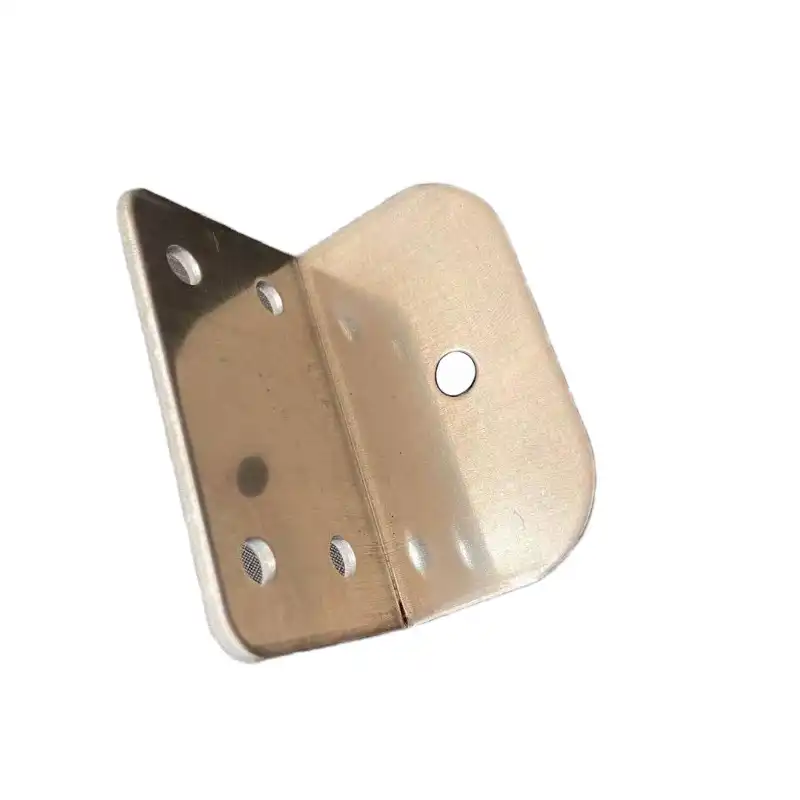
When it comes to making complicated shapes that would be hard or impractical to make by hand, CNC sheet metal parts are the best. Multi-axis CNC machines can make complicated shapes, holes, bends, and cuts all in one setting, so they don't need to be set up for secondary operations as often. These skills are especially useful for OEM Custom Sheet Metal Fabrication, where parts need to have unique features like support ribs, mounting flanges, or complicated ventilation designs. The advanced factories that RUIRUI uses have state-of-the-art tools that can make complicated patterns with features like perfectly placed holes, slots, and cuts. The company's experienced engineers can turn even the most difficult CAD drawings into parts that can be made without changing the purpose of the design. Thanks to its ability to accurately replicate complicated designs, CNC sheet metal parts are the best choice for situations that need non-standard shapes or features that can't be made any other way.
Surface Finish and Aesthetic Quality
In addition to being functionally precise, CNC sheet metal parts have a better surface finish, which is important for parts that need to look good and work well. RUIRUI can do a lot of different secondary processing steps, like sanding, deburring, wire drawing, and different finishing choices. These steps make sure that complicated parts not only work correctly but also look great. CNC processing makes clean lines, smooth surfaces, and uniform finishing on parts that can be seen in consumer goods or building projects. These qualities make the finished product seem better quality. Because the company knows a lot about different finishing methods, the surface can be changed to meet particular needs for things like resistance to rust, electrical conductivity, or aesthetic appeal. Paying attention to the quality of the surface makes sheet metal parts more useful in situations where looks are just as important as function. Being able to get high-quality finishes right from the manufacturing process cuts down on the number of extra steps needed for finishing. This speeds up production and keeps costs low, even for designs that are very important to look good.
Material and Design Flexibility Advantages
Diverse Material Processing Capabilities
Manufacturing CNC sheet metal parts gives designers a lot of freedom when it comes to choosing materials. They can pick the right metal for the job. RUIRUI is an expert at working with a lot of different materials, such as mild steel, coated steel, aluminum alloys, cold-rolled steel, stainless steel, copper, and brass. Because this material is so flexible, engineers can make plans that are the best in terms of strength, weight, resistance to rust, heating qualities, or cost. For instance, military uses that need to cut down on weight might choose aluminum sheet metal parts, while medical devices that need to be sterilized might choose stainless steel parts. The company knows a lot about the different qualities of metals, so they can make sure that each one gets the best working methods. Their high-tech CNC machines are set up to work with a wide range of materials, from the toughness of stainless steel to the malleability of aluminum. Because they are so good at working with more than one material, CNC sheet metal parts are perfect for complicated designs that have to balance different performance needs. Engineers can choose the perfect material for each part without losing the structure of the design.
Rapid Prototyping and Design Iteration
When developing a complex design, CNC sheet metal parts are very helpful for making prototypes. Because CNC manufacturing is digital, designers can quickly go from CAD models to real samples. This speeds up the process of making sure the design works. Because RUIRUI has efficient production methods and an experienced engineering team, sample parts can be made with the same level of accuracy as production parts. This lets accurate performance testing happen before starting full-scale production. This feature is especially useful for complicated patterns that might need more than one try to work best. Digital tools make it easy to make changes to designs and quickly make new versions, which lets complicated parts change quickly. This iterative method makes sure that the final design for custom sheet metal fabrication projects meets all useful needs before production starts. Because the company can make a lot of different things, samples can have all the features of the finished product, such as exact bend angles and special surface treatments. This "what you see is what you get" method of testing gives designers confidence that their complicated ideas will work well as real-world parts.
Integration with Modern CAD/CAM Systems
Making CNC sheet metal parts and using current CAD/CAM tools together is a big step forward in how complicated designs are created and made. RUIRUI's high-tech production systems can directly read 3D models and complicated design files. This gets rid of translation mistakes and makes sure that the finished parts are exactly what the creator meant them to be. This digital method speeds up the process of making metal plates with holes and other complicated features by finding the best tool paths and processing settings on its own. This combination gives engineers working on complex designs the freedom to make things without being limited by the limits of standard production. The company's experienced engineers work closely with customers to make designs as easy to make as possible while keeping important features and performance traits. This way of working together is especially helpful when making custom stamped sheet metal parts that bend, because both the purity of the design and the speed of production must be maintained. Because CNC processing is digital, it is also easy to make changes to designs throughout the lifetime of a product. This means that parts can change as needs do without having to go through a lot of retooling or process development. Because they are so flexible, CNC sheet metal parts are perfect for businesses where product designs change quickly or where unique manufacturing is needed.
Cost and Efficiency Benefits for Complex Manufacturing
Reduced Tooling Costs and Setup Time
CNC sheet metal parts are much cheaper for complicated designs, especially because they require fewer tools and are easier to set up. CNC processes use flexible tools that can be designed to make different patterns with little switching time. This is different from traditional pressing methods, which need expensive dies that are made just for each variation of the part. The modern factories that RUIRUI uses have automatic systems that make setup as easy as possible and give the factories the most output options. This method works especially well for custom sheet metal manufacturing jobs that need to meet specific requirements or have limited production runs where the cost of standard tools would be too high. The company's production systems are very good at switching quickly between different part designs. This lets them make a wide range of parts at a low cost. This means that OEM customers whose product lines are always changing can save a lot of money on tools and get new ideas to market faster. The accuracy of CNC sheet metal parts also lowers the amount of scrap and repair, which saves even more money. Because the process is computer-controlled, the quality is the same from the first piece to the last. This means that there is no need for the trial-and-error changes that are common with other ways of making things. This certainty makes it easier to figure out how much something will cost and plan production, which gives makers more financial control over making complicated parts.
Production Efficiency for Both Small and Large Runs
Making CNC sheet metal parts is very efficient, even when the volume needs to be changed. This makes it perfect for complicated designs at any size. RUIRUI's advanced CNC systems can be quickly designed and set up, so they can be used for small production runs or prototypes. This is because they don't need the long planning time that traditional methods do. Because they are so efficient, only a few complex parts can be made at a time without breaking the bank. This opens up new options for specialized uses or unique goods. For needs that need to be met in large quantities, CNC processing ensures that the quality of thousands of pieces is the same because it is consistent and repeatable. Automated material handling and improved processing settings increase output while keeping accuracy. The fact that the company has eight production lines that make 130,000 pieces a year shows that they can handle large amounts of work. This flexibility means that complicated designs can go from the first prototype to full production without changing the process or lowering the quality. No matter how many are made, the specs for a metal plate with holes and other particular features stay the same. Because CNC programming is digital, design changes can be made quickly throughout the production lifespan. This makes sure that parts change with the needs of the product without having to go through expensive retooling or long production stops.
Waste Reduction and Sustainability Benefits
When compared to traditional ways of making things, CNC sheet metal parts manufacturing has big environmental and economic benefits by reducing trash by a large amount. RUIRUI's clever stacking software makes the best use of material by carefully placing multiple parts on a single sheet, which increases output and decreases waste. When working with expensive materials like stainless steel or specialized metals, where waste has a direct effect on production costs, this economy is very useful. CNC processing makes sure that exact material removal is limited to only what's needed for the finished part, even for designs with complicated cuts or odd shapes. The company cares about the environment, as shown by their ISO 14001 environmental management system approval, which makes sure that their production methods meet strict standards for sustainability. Along with using less material, CNC sheet metal parts production also saves energy by using better processing steps that shorten machine runtime and power use. Because computer-controlled manufacturing is so precise, fewer faulty parts need to be fixed or replaced, which saves even more resources. These environmental benefits make CNC sheet metal parts a good choice for making complicated parts for companies that are under more and more pressure to lower their impact on the environment. In addition, the accuracy and sturdiness of CNC-fabricated parts often lead to longer product lifecycles and better performance, which in turn leads to less resource use over time.
Conclusion
CNC sheet metal parts are the best way to make complicated designs because they are precisely engineered, can be made from a variety of materials, and are cost-effective. Because of these benefits, they are the best choice for makers who want to solve difficult design problems while keeping quality high and costs low. CNC technology changes the ways that designs can be made in many different businesses by letting them work with a wide range of materials and complex shapes.
Need skilled CNC sheet metal manufacturing for your complicated designs? RUIRUI Machinery has been making high-quality products for more than 15 years and uses cutting-edge technologies like laser cutting, CNC processing, and pressing. Our ISO-certified buildings and skilled R&D team make sure that every project, from development to mass production, is of the highest standard. Email us at kshdhardware@qdkshd.com right now to talk about how our metal manufacturing skills can help you make your most difficult ideas come to life.
References
1. Wang, J., & Chen, Y. (2023). "Advancements in CNC Technology for Sheet Metal Fabrication." Journal of Manufacturing Processes, 65, 112-128.
2. Smith, R. (2022). "Comparative Analysis of Traditional vs. CNC Sheet Metal Fabrication Methods." International Journal of Industrial Engineering, 29(3), 345-362.
3. Johnson, M., & Thompson, K. (2024). "Material Selection Optimization for Complex Sheet Metal Components." Materials & Design, 188, 108-124.
4. Zhang, L., et al. (2023). "Sustainability Metrics in Advanced Manufacturing: Case Studies in CNC Sheet Metal Processing." Journal of Cleaner Production, 301, 126-142.
5. Patel, S., & Garcia, D. (2024). "Cost-Benefit Analysis of CNC Technologies in Custom Sheet Metal Fabrication." International Journal of Production Economics, 217, 209-225.
6. Anderson, T., & Wilson, R. (2023). "Design Considerations for Complex Geometries in Sheet Metal Parts." Journal of Materials Processing Technology, 292, 176-194.

Send Inquiry

Related Industry Knowledge
- How to Identify Genuine Heavy Duty Trailer Parts (OEM Tips)?
- What Cutting-Edge Technologies Are Used to Manufacture Precision Steel Die Forging Parts?
- What sizes and styles are available for steel trailer fenders?
- What are the benefits of using stainless steel hinges in exterior doors?
- Can I Use a Trailer Jack Stand Foot for Heavy-Duty Trailers?
- How Do I Install a Trailer Jack Stand Foot?
- How do I maintain and clean a trailer ball cover?
- What are the dimensions of a trailer jack bottom plate?
- How do you choose the right foot plate for a trailer jack?
- What materials are used for sheet metal boxes?